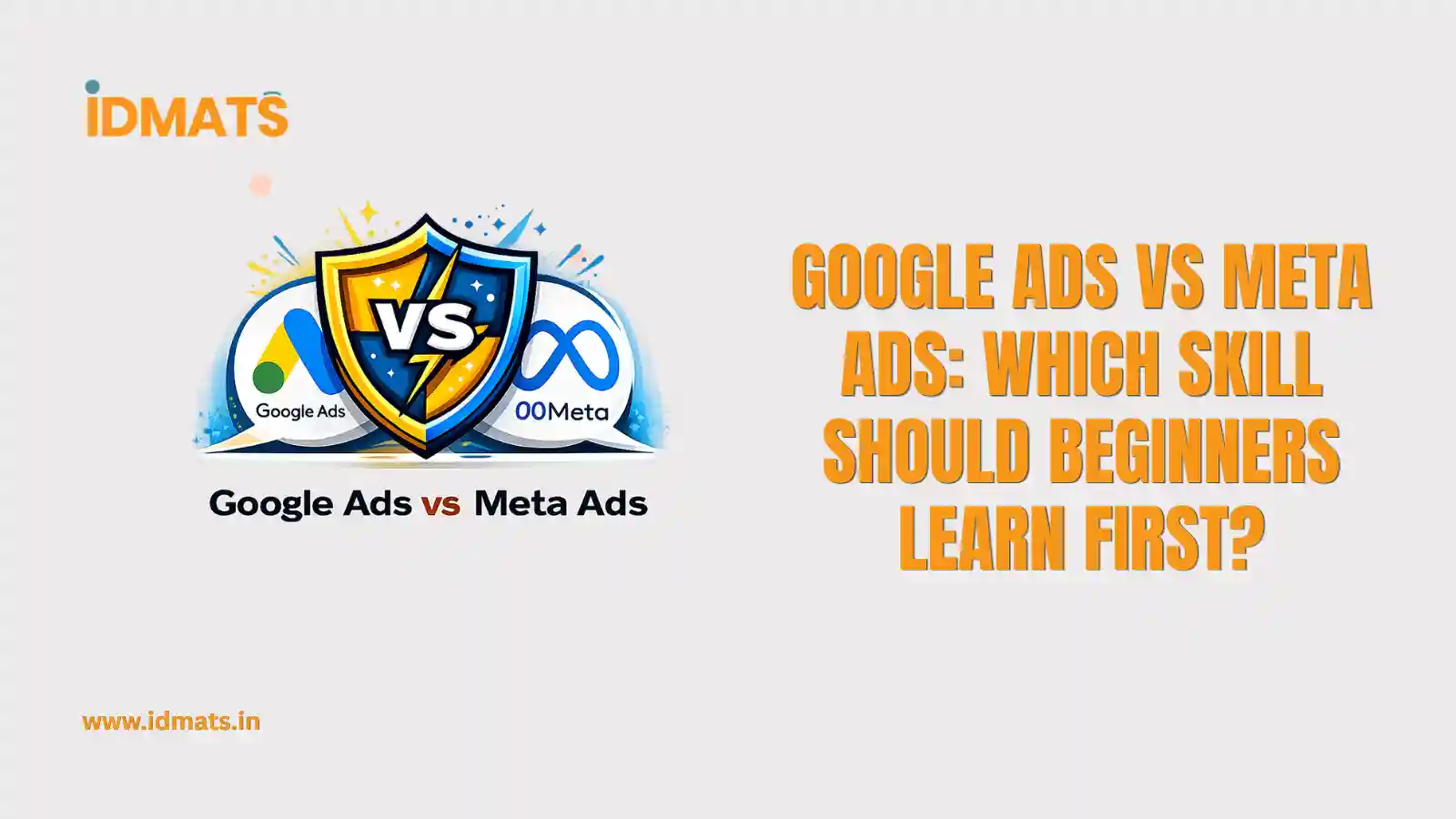
Google Ads vs Meta Ads: Which Skill Should Beginners Learn First? Beginners should generally learn Google Ads first if they want to understand search intent, keyword targeting and lead generation. However, Meta Ads can be a better starting point for people interested in social media marketing, creative advertising and audience engagement. The right choice depends on your career goals, target audience and the type of business you want to promote.
Both platforms are important parts of digital advertising. Google Ads helps businesses reach people searching for products or services, while Meta Ads helps businesses reach audiences through platforms such as Facebook and Instagram. Learning both can give beginners a stronger foundation in performance marketing.
In this guide, we will compare Google Ads and Meta Ads, explain their key differences, explore career opportunities and help beginners decide which advertising skill to learn first.
What Are Google Ads and Meta Ads?
Google Ads and Meta Ads are two major online advertising platforms. Both help businesses reach potential customers, but they use different methods to connect advertisers with audiences.
What Is Google Ads?
Google Ads is Google's online advertising platform. Businesses use it to display paid advertisements across Google's advertising network, including Google Search, YouTube and participating websites and apps.
For example, someone searching for “best website designer in Agra” may see a sponsored result from a local web design company. The business can use Google Search campaigns to reach people who are actively looking for that service.
Google Ads includes several campaign types, such as:
Search Ads: Text advertisements shown in Google Search results.
Display Ads: Visual advertisements shown across participating websites and apps.
YouTube Ads: Video advertisements delivered through YouTube.
Shopping Ads: Product advertisements for eligible retailers.
Performance Max: Campaigns that use Google's automation to reach customers across multiple Google advertising channels.
Google Ads is particularly useful for learning keyword targeting, search intent, conversion tracking, bidding strategies and campaign optimisation.
Visit Also: What Is ROAS in Digital Marketing
What Are Meta Ads?
Meta Ads is the advertising system used to create and manage paid campaigns across Meta platforms, including Facebook and Instagram. Depending on campaign settings and placements, advertisements may also appear across other eligible Meta surfaces.
Unlike search advertising, Meta Ads can help businesses reach people based on factors such as audience characteristics, interests, behaviours and their interaction with a brand. Available targeting and delivery options depend on Meta's current policies and tools.
For example, a clothing brand can use Instagram advertising to showcase a new collection to a relevant audience. A coaching institute can promote a course through engaging images, short videos, lead forms and other ad formats.
Meta Ads commonly involves:
Facebook and Instagram advertising
Audience research and campaign targeting
Image, video and carousel advertisements
Lead generation campaigns
Retargeting where eligible
Creative testing and performance analysis
It is particularly useful for learning visual advertising, audience engagement, creative testing and social media campaign management.
Google Ads vs Meta Ads: Key Differences
The main difference is how the platforms connect businesses with potential customers. Google Ads often captures existing demand, while Meta Ads can help create demand by introducing products and services to relevant audiences.
Feature | Google Ads | Meta Ads |
|---|---|---|
Main platforms | Google Search, YouTube and other eligible placements | Facebook, Instagram and other eligible Meta placements |
Common approach | Reach people searching for solutions | Reach audiences through targeted advertising |
Important skills | Keyword research, search intent, bidding and conversion tracking | Audience research, creative strategy, testing and engagement |
Common formats | Search text, display, video and shopping ads | Image, video, carousel, story and lead ads |
Example objective | Generate enquiries from people searching for a service | Introduce a course to potential students through social media |
Useful for | Search-led leads and sales | Brand awareness, lead generation and product discovery |
Neither platform is automatically better for every business. Results depend on the offer, audience, competition, advertising budget, landing page and campaign execution.
Which Skill Should Beginners Learn First?
The best starting point depends on the kind of work you want to do.
1. Learn Google Ads First If You Want to Generate Leads
Google Ads is a strong starting point for beginners interested in lead generation, local businesses and search-based campaigns.
When someone searches for a service, they may already have a clear need. Search advertising gives businesses an opportunity to reach these potential customers at the right moment.
For example, a local training institute can target relevant searches from people looking for digital marketing courses. A beginner can learn how to research keywords, write ad copy, organise campaigns and measure enquiries.
Start by learning:
Keyword research and search intent
Campaign and ad group structure
Match types and negative keywords
Ad copy and landing page relevance
Conversion tracking
Bidding and budget management
Search term and performance analysis
These skills can provide a useful foundation for paid search advertising and performance marketing.
2. Learn Meta Ads First If You Enjoy Creativity
Meta Ads may be a better first choice if you enjoy social media, content creation, audience research and visual communication.
Businesses often use Facebook and Instagram advertising to introduce products, promote offers, generate leads and build awareness. Strong creative work can help an advertisement attract attention and encourage people to take action.
For example, a fashion business may use short videos, product images and carousel advertisements to showcase its collection. A beginner can test different creative ideas and compare their performance.
Start by learning:
Audience research and campaign objectives
Meta Ads Manager
Image and video ad formats
Ad copywriting and creative strategy
Lead forms and landing pages
Campaign testing
Reporting and optimisation
Meta Ads can be especially appealing to beginners who want to combine advertising knowledge with social media marketing.
Google Ads vs Meta Ads: Which Has Better Career Opportunities?
Both skills can support a career in digital marketing. The opportunities available to you depend on your practical experience, analytical ability, portfolio and understanding of business goals.
Google Ads career paths may include:
Google Ads Specialist
PPC Executive
Paid Search Specialist
Search Marketing Executive
Performance Marketing Executive
Meta Ads career paths may include:
Meta Ads Specialist
Social Media Advertising Executive
Paid Social Specialist
Lead Generation Executive
Performance Marketing Executive
Some roles require expertise in both platforms. An employer may want someone who can manage paid search, paid social, tracking, reporting and campaign optimisation.
For this reason, learning one platform well and then adding the other can be a sensible approach for beginners.
Remember that completing a course does not guarantee a job. Employers may also assess practical assignments, campaign understanding, communication skills and the ability to explain results.
Google Ads and Meta Ads in the Google Knowledge Graph Context
Google's Knowledge Graph is a knowledge base that helps Google understand entities—such as organisations, people, products and concepts—and the relationships between them. It supports Google's understanding of information and can contribute to how certain search results are presented.
For an article about Google Ads vs Meta Ads, clear entity relationships make the content easier for both readers and search systems to understand.
The key entities include:
Google: The technology company that provides Google Ads.
Google Ads: Google's online advertising platform.
Google Search: A search service where eligible Google Search advertisements can appear.
YouTube: Google's video platform, which supports eligible advertising campaigns.
Meta Platforms: The company behind Facebook and Instagram.
Facebook and Instagram: Social platforms where Meta advertisements can appear.
Performance marketing: An approach that uses measurable actions and results to evaluate advertising performance.
Conversion tracking: The process of measuring valuable actions, such as purchases, form submissions or calls.
These entities are related, but they are not interchangeable. Google Ads and Meta Ads are separate advertising platforms, while performance marketing is a broader discipline that can include both.
To make this article more useful for search engines and AI systems, use accurate terminology, descriptive headings, clear explanations and relevant internal links. Where appropriate, link to official Google Ads and Meta business resources. Structured data should accurately represent the page; adding schema does not guarantee a Knowledge Graph entry or an AI Overview citation.
Can Beginners Learn Google Ads and Meta Ads Together?
Yes, but learning both platforms at the same time may feel confusing if you have never worked with digital advertising.
A better approach is to learn the basic principles first, practise one platform, review the results and then move to the second platform.
For example, you can follow this learning plan:
Understand advertising basics: Learn campaign objectives, audiences, budgets, ad copy and conversions.
Choose one platform: Start with Google Ads or Meta Ads based on your career interests.
Practise with a sample project: Build a campaign plan for a real or fictional business.
Learn measurement: Understand clicks, impressions, click-through rate, cost per click, conversion rate and cost per lead.
Add the second platform: Compare how search intent and audience-based advertising work.
Build a portfolio: Document your campaign objectives, decisions, results and lessons learned.
If you do not have an advertising budget, you can still practise campaign planning, keyword research, audience selection, ad copywriting and reporting with sample data. Do not claim that simulated results are actual campaign performance.
How IDMATS Can Help Beginners Learn Digital Advertising
Beginners often need more than theory to understand how online advertising works. They need a clear learning plan, practical exercises and guidance when they face problems.
IDMATS – Institute of Digital Marketing and Technical Skills offers digital marketing training for learners who want to develop their understanding of areas such as Google Ads, social media marketing, SEO, content marketing and analytics.
When evaluating a digital marketing course, look for opportunities to practise campaign planning, understand advertising reports, learn conversion tracking and work through real-world case studies.
You should also ask whether the training includes Google Ads and Meta Ads, how practical assignments are assessed and what career guidance is available. Choose a programme based on its curriculum and learning support rather than relying only on promotional claims.
The aim should be to build skills that you can explain, demonstrate and apply to business problems.
Final Verdict: Google Ads or Meta Ads?
For beginners interested in search advertising, local leads and measurable search-based campaigns, Google Ads is a sensible place to start. It teaches valuable skills in keyword research, search intent, bidding and conversion tracking.
If you enjoy creative content, social media and audience-based advertising, Meta Ads may be the better starting point.
Neither platform is universally superior. The strongest long-term option is to understand one platform well, build practical experience and gradually learn the other. Combining both skills can help you understand more of the customer journey, from discovering a product to searching for it and making a purchase.
Frequently Asked Questions
1. Is Google Ads easier than Meta Ads for beginners?
Google Ads may feel more structured for people who like keyword research and search intent. Meta Ads may feel more natural for people who enjoy creative content and social media. The easier option depends on your interests and learning style.
2. Should I learn Google Ads or Meta Ads first for a digital marketing job?
Start with the platform that matches the roles you want to pursue. Google Ads is useful for paid search and PPC roles, while Meta Ads is valuable for paid social and social media advertising. Learning both can broaden your options.
3. Can I learn Google Ads without a website?
Yes. You can learn campaign structure, keyword research, ad writing and reporting concepts without owning a website. However, a suitable website or landing page is often needed to practise and measure website conversions in a real campaign.
4. Do I need coding skills to learn Google Ads or Meta Ads?
No. You can learn the core advertising features without coding. Basic website knowledge and familiarity with analytics or tracking tools can be useful as you progress.
5. Can Google Ads and Meta Ads be used together?
Yes. Businesses can use Google Ads to reach people searching for specific solutions and Meta Ads to introduce products, build awareness or reconnect with eligible audiences. Using both platforms can support a broader marketing strategy when the budget and goals justify it.
Visit Also: How to Choose the Best Digital Marketing Institute in Agra for Practical Training